publications
Peer-reviewed publications and manuscripts currently under review to which I have contributed.
Published / Accepted
2026
- JNR
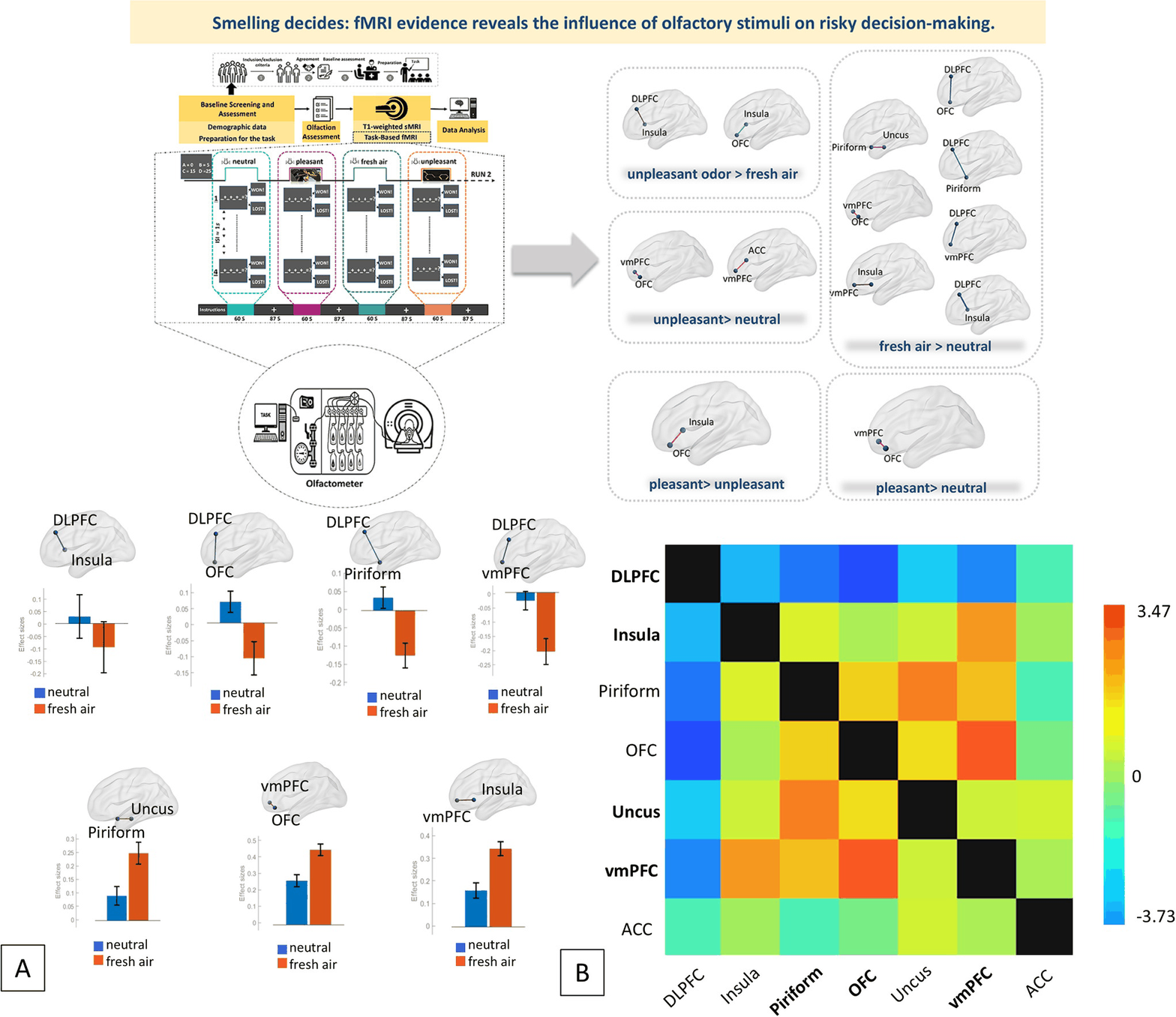 Smelling decides: fMRI evidence reveals the influence of pleasant and unpleasant odors on risky decision-makingA. Dakhili, S. K. Kamrava, and A. Zare-SadeghiJournal of Neuroradiology, 2026✨ Featured by the Journal of Neuroradiology
Background and purpose: Olfactory stimuli are known to have a significant effect on cognitive functions. However, their effect on risky decision-making remains unclear. The present study aimed to investigate this effect, using functional magnetic resonance imaging (fMRI) and a novel mixed gambling task. Materials and Methods: Twenty-nine healthy participants with normal olfactory function underwent fMRI scanning while performing a gambling task under exposure to pleasant and unpleasant odors, as well as fresh air and a neutral condition without any olfactory stimulation. ROI-to-ROI functional connectivity analyses were conducted, focusing on regions involved in olfactory processing and risky decision-making, including dorsolateral prefrontal cortex (DLPFC), ventromedial prefrontal cortex (vmPFC), orbitofrontal cortex (OFC), insula, anterior cingulate cortex (ACC), piriform cortex, and uncus. Results: Pleasant odors, compared to the neutral condition, enhanced connectivity between OFC and vmPFC. Fresh air, compared to neutral, reduced connectivity between the DLPFC, OFC, vmPFC, piriform and insula, while increasing connectivity between the piriform and uncus. Unpleasant odors, compared to neutral, increased connectivity between the vmPFC, OFC, and ACC. Unpleasant odors, compared to fresh air, enhanced connectivity between the DLPFC and insula but reduced connectivity between the insula and OFC. Pleasant odors, compared to unpleasant odors, increased connectivity between the insula and OFC (p-FDR < 0.05). Conclusion: Olfactory stimuli modulate neural networks underlying risky decision-making during a mixed gambling task. These findings highlight the clinical relevance of olfactory modulation for addiction research and the potential of functional connectivity analyses to provide a foundation for personalised interventions aimed at reducing maladaptive risk-taking behavior and cue-driven vulnerability.
@article{dakhili2026_smelling_decides,
  status = {published},
  title = {Smelling decides: fMRI evidence reveals the influence of pleasant and unpleasant odors on risky decision-making},
  author = {Dakhili, A. and Kamrava, S. K. and Zare-Sadeghi, A.},
  journal = {Journal of Neuroradiology},
  year = {2026},
  volume = {53},
  pages = {101529},
  doi = {10.1016/j.neurad.2026.101529},
  note = {✨ Featured by the Journal of Neuroradiology},
}
2025
- BMJOpen
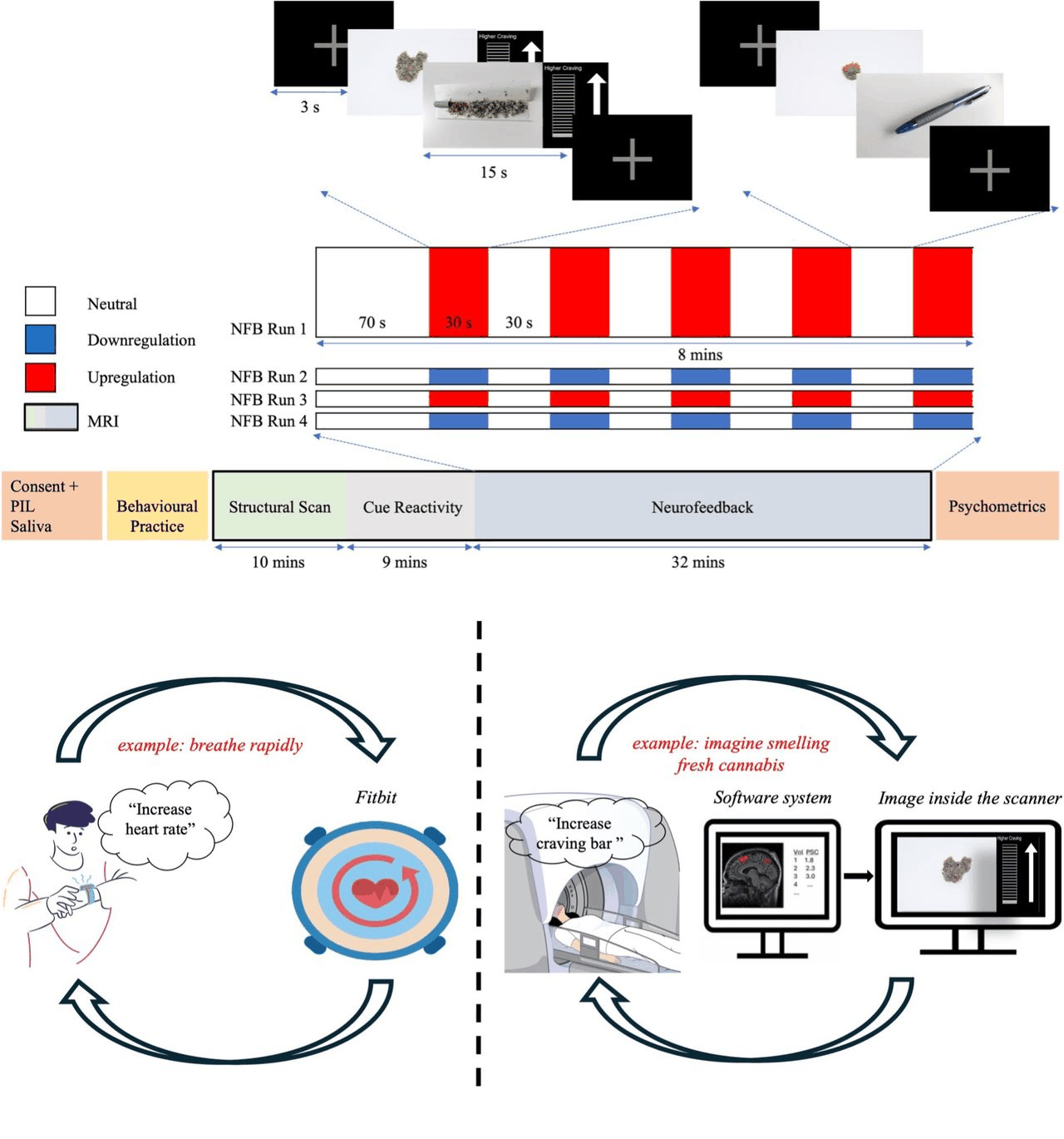 CannChange: A protocol for a feasibility study using fMRI-based neurofeedback to change the neurobiology of craving in Cannabis Use DisorderE. Murphy, A. Dakhili, S. Ganesan, and 9 more authorsBMJ Open, 2025
Introduction: Cannabis use disorder (CUD) affects ∼33 million people globally and can be underscored by intense cravings to use cannabis, which can trigger compulsive use and relapse. Functional MRI (fMRI) evidence demonstrates hyperactivity of addiction brain pathways during cannabis cue- reactivity, consistent with prominent neuroscientific theories of addiction, particularly within the anterior cingulate cortex (ACC). The ACC also emerges as a key region of real- time fMRI- based neurofeedback (fMRI- neurofeedback) studies demonstrating voluntary changes during cravings in persons who use substances. However, this notion is untested in CUD. Methods and analysis: We aim to develop a protocol that tests the feasibility of fMRI- neurofeedback to enable persons with a moderate- to- severe CUD to increase the activity of the ACC during cannabis- induced craving to provide mechanistic insights on treatment targets; and decrease ACC activity during cue- induced craving to pave the way for reducing brain reactivity. The primary outcome measure is the change in ACC activity during fMRI- neurofeedback compared with a non- regulation condition. Ethics and dissemination: This feasibility study has been approved by the Human Research Ethics Committee of Australian Catholic University. On completion, the findings from this study will be published in academic journals, presented at conferences and disseminated to clinicians and to individuals who use cannabis. The results from this feasibility study have the potential to inform the conduct of powered trials to examine how fMRI- neurofeedback can identify and reduce craving- related brain dysfunction in CUD.
@article{murphy2025_cannchange_protocol,
  status = {published},
  title = {CannChange: A protocol for a feasibility study using fMRI-based neurofeedback to change the neurobiology of craving in Cannabis Use Disorder},
  author = {Murphy, E. and Dakhili, A. and Ganesan, S. and Zalesky, A. and Glarin, R. and Thomson, H. and Paloubis, A. and Moffat, B. and Kamboj, S. and Poudel, G. and Suo, C. and Lorenzetti, V.},
  journal = {BMJ Open},
  year = {2025},
  volume = {15},
  number = {8},
  pages = {e105854},
  doi = {10.1136/bmjopen-2025-105854},
}
2022
- DAD
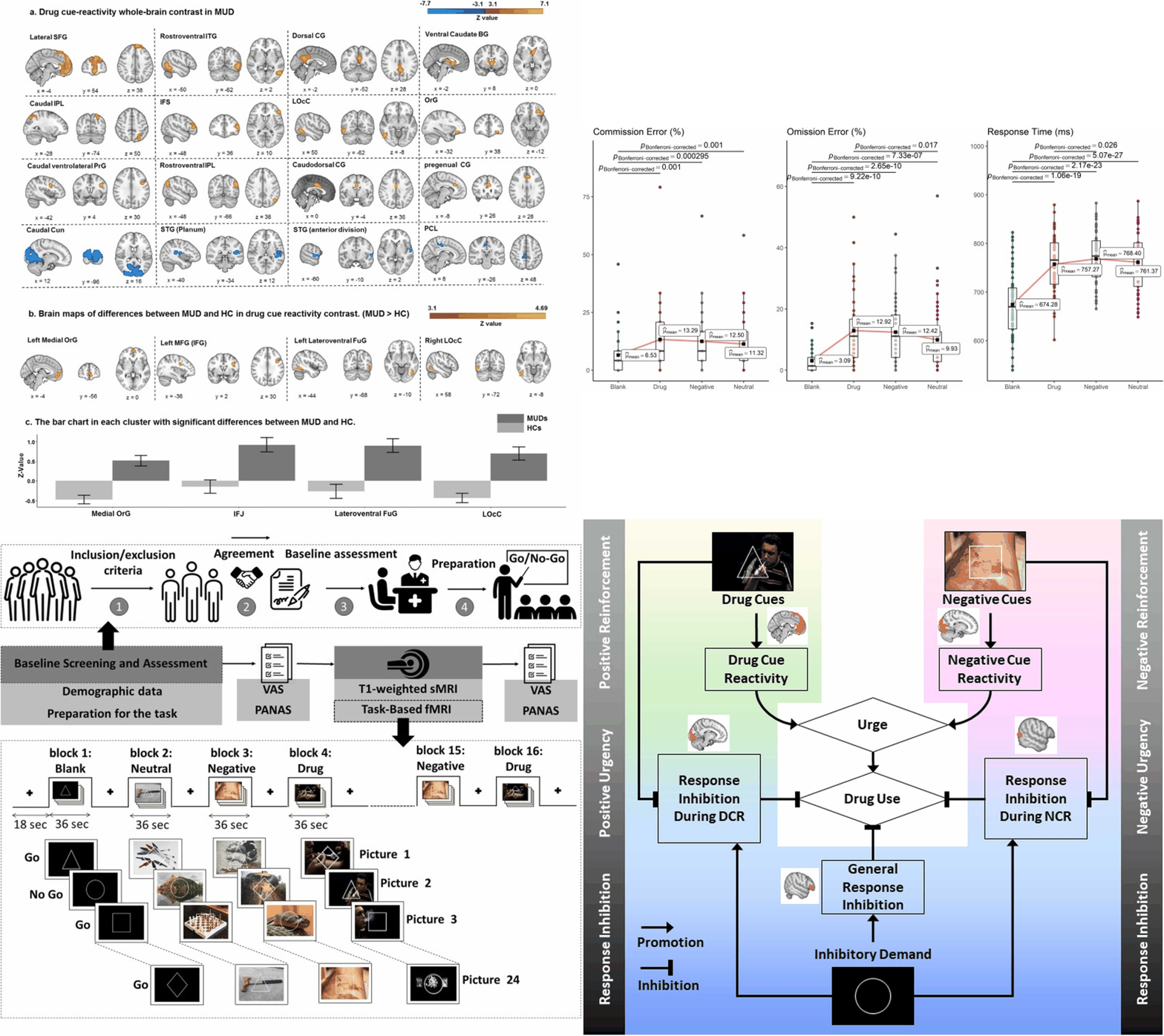 Cue-induced craving and negative emotion disrupt response inhibition in methamphetamine use disorder: Behavioral and fMRI results from a mixed Go/No-Go taskA. Dakhili, A. Sangchooli, S. Jafakesh, and 7 more authorsDrug and Alcohol Dependence, 2022
Background: Drug-related cue-reactivity, dysfunctional negative emotion processing, and response-disinhibition constitute three core aspects of methamphetamine use disorder (MUD). These phenomena have been studied independently, but the neuroscientific literature on their interaction in addictive disorders remains scant. Methods: 62 individuals with MUD were scanned when responding to the geometric Go or No-Go cues superimposed over blank, neutral, negative-emotional and drug-related background images. Neural correlates of drug and negative-emotional cue-reactivity, response-inhibition and their interactions were estimated, and methamphetamine cue-reactivity was compared between individuals with MUD and 23 healthy controls. Relationships between behavioral characteristics and observed activations were investigated. Results: Individuals with MUD had longer reaction times and more errors in drug and negative-emotional compared to blank blocks, and more omission errors in drug compared to neutral blocks. They showed higher drug cue-reactivity than controls across prefrontal, fusiform, and visual regions (Z > 3.1, p-corrected<0.05). Response-inhibition was associated with precuneal, inferior parietal, anterior cingulate, temporal, and inferior frontal activations (Z > 3.1, p-corrected<0.05). Response-inhibition in drug cue blocks coincided with higher activations in the visual cortex and lower activations in the paracentral lobule and superior and inferior frontal gyri, while inhibition during negative-emotional blocks led to higher superior parietal, fusiform, and lateral occipital activations (Z > 3.1, p-corrected<0.05). Conclusion: Drug cue-reactivity may impair response inhibition partly through activating dis-inhibitory regions, while temporal and parietal activations associated with response-inhibition in negative blocks suggest compensatory activity. Results suggest that drug and negative-emotional cue-reactivity influence response-inhibition, and the study of these interactions may aid mechanistic understanding of methamphetamine use disorder.
@article{dakhili2022_meth_gonogo,
  status = {published},
  title = {Cue-induced craving and negative emotion disrupt response inhibition in methamphetamine use disorder: Behavioral and fMRI results from a mixed Go/No-Go task},
  author = {Dakhili, A. and Sangchooli, A. and Jafakesh, S. and Zare-Bidoki, M. and Soleimani, G. and Batouli, S. A. H. and Oghabian, M. A. and Kazemi, K. and Faghiri, A. and Ekhtiari, H.},
  journal = {Drug and Alcohol Dependence},
  year = {2022},
  volume = {233},
  pages = {109353},
  doi = {10.1016/j.drugalcdep.2022.109353},
}
2021
- SciRep
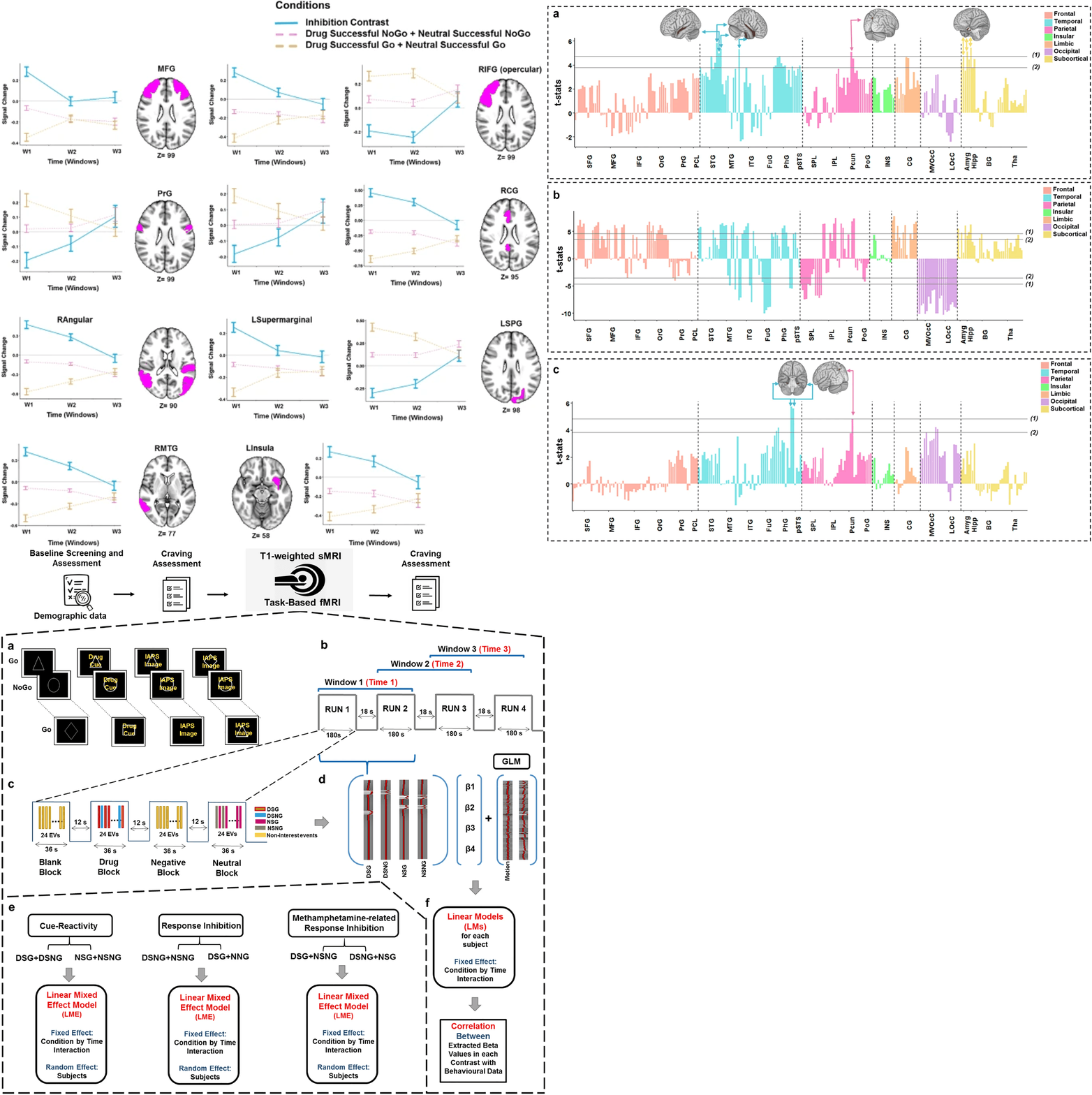 Temporally Dynamic Brain Activity During Drug Cue Reactivity and Response Inhibition in Methamphetamine Use DisorderS. Jafakesh, A. Sangchooli, A. Aarabi, and 5 more authorsScientific Reports, 2021
Cue‑induced drug craving and disinhibition are two essential components of continued drug use and relapse in substance use disorders. While these phenomena develop and interact across time, the temporal dynamics of their underlying neural activity remain under‑investigated. To explore these dynamics, an analysis of time‑varying activation was applied to fMRI data from 62 men with methamphetamine use disorder in their first weeks of recovery in an abstinence‑based treatment program. Using a mixed block‑event, factorial cue‑reactivity/Go‑NoGo task and a sliding window across the task duration, dynamically‑activated regions were identified in three linear mixed effects models (LMEs). Habituation to drug cues across time was observed in the superior temporal gyri, amygdalae, left hippocampus, and right precuneus, while response inhibition was associated with the sensitization of temporally‑dynamic activations across many regions of the inhibitory frontoparietal network. Methamphetamine‑related response inhibition was associated with temporally dynamic activity in the parahippocampal gyri and right precuneus (corrected p‑value < 0.001), which show a declining cue‑reactivity contrast and an increasing response inhibition contrast. Overall, the declining craving‑related activations (habituation) and increasing inhibition‑associated activations (sensitization) during the task duration suggest the gradual recruitment of response inhibitory processes and a concurrent habituation to drug cues in areas with temporally‑dynamic methamphetamine‑related response inhibition. Furthermore, temporally dynamic cue‑reactivity and response inhibition were correlated with behavioral and clinical measures such as the severity of methamphetamine use and craving, impulsivity and inhibitory task performance. This exploratory study demonstrates the time‑variance of the neural activations undergirding cue‑reactivity, response inhibition, and response inhibition during exposure to drug cues, and suggests a method to assess this dynamic interplay. Analyses that can capture temporal fluctuations in the neural substrates of drug cue‑reactivity and response inhibition may prove useful for biomarker development by revealing the rate and pattern of sensitization and habituation processes, and may inform mixed cue‑exposure.
@article{jafakesh2021_dynamic_cuereactivity,
  status = {published},
  title = {Temporally Dynamic Brain Activity During Drug Cue Reactivity and Response Inhibition in Methamphetamine Use Disorder},
  author = {Jafakesh, S. and Sangchooli, A. and Aarabi, A. and Helfroush, M. S. and Dakhili, A. and Oghabian, M. A. and Kazemi, K. and Ekhtiari, H.},
  journal = {Scientific Reports},
  year = {2021},
  volume = {12},
  number = {1},
  pages = {1--18},
  doi = {10.1038/s41598-022-05619-8},
}
Under Review
- MethodsAn fMRI-neurofeedback system to train the reward neurocircuitry in ultra-high field MRIA. Dakhili, E. Murphy, S. Ganesan, and 8 more authorsunderreview
@unpublished{dakhili_uhf_nf_system_underreview, status = {underreview}, title = {An fMRI-neurofeedback system to train the reward neurocircuitry in ultra-high field MRI}, author = {Dakhili, A. and Murphy, E. and Ganesan, S. and Zalesky, A. and Glarin, R. and Thomson, H. and Paloubis, A. and Moffat, B. and Poudel, G. and Suo, C. and Lorenzetti, V.}, note = {underreview} } - rtfMRI-NF FeasibilityExploring fMRI-neurofeedback to reduce craving-related brain activity in people with Cannabis Use Disorder: a feasibility studyE. Murphy, A. Dakhili, S. Ganesan, and 9 more authorsUnder review
@unpublished{murphy_reduce_craving_nf_feasibility_inprep, status = {underreview}, title = {Exploring fMRI-neurofeedback to reduce craving-related brain activity in people with Cannabis Use Disorder: a feasibility study}, author = {Murphy, E. and Dakhili, A. and Ganesan, S. and Zalesky, A. and Glarin, R. and Thomson, H. and Paloubis, A. and Moffat, B. and Kamboj, S. and Poudel, G. and Suo, C. and Lorenzetti, V.}, note = {Under review} } - Meta-analysisThe subjective effects of cannabis: A dose-response meta-regressionI. Goodwin, D. Oliver, E. Chesney, and 16 more authorsPreprint available on OSF
@unpublished{goodwin_subjective_effects_cannabis_dosemeta_inprep, status = {underreview}, title = {The subjective effects of cannabis: A dose-response meta-regression}, author = {Goodwin, I. and Oliver, D. and Chesney, E. and Gaillard, A. and Wang, S. and Wong Koo, A. and Petrilli, K. and Skumlien, M. and Dakhili, A. and Wigroth, S. and Obreshkova, S. and Yusufzai, S. and Vandrey, R. and Krausz, M. and Freeman, T. and McGuire, P. and Strang, J. and Lorenzetti, V. and Englund, A.}, note = {Preprint available on OSF}, url = {https://osf.io/preprints/psyarxiv/w7rty_v1} } - fMRI Cue-reactivityCannabis cue reactivity in young adults with cannabis use disorder: A functional magnetic resonance imaging studyL. Greenwood, C. Suo, A. H. Arun, and 14 more authorsUnder review
@unpublished{greenwood_neurocircuitry_cannabis_cuecraving_underreview, status = {underreview}, title = {Cannabis cue reactivity in young adults with cannabis use disorder: A functional magnetic resonance imaging study}, author = {Greenwood, L. and Suo, C. and Arun, A. H. and Dakhili, A. and Solowij, N. and Verdejo-Garcia, A. and Abbott, G. and Bartschi, J. and Dunsford, S. and McTavish, E. and Paloubis, A. and Quinones-Valera, M. and Ramamurthy, J. R. and Thomson, H. and Schira, M. M. and Cousijn, J. and Lorenzetti, V.}, note = {Under review} } - OSFA new, co-designed repository of cannabis images from street cannabis: the CANNA datasetV. Lorenzetti, H. Thomson, I. Goodwin, and 4 more authorsUnder review
@unpublished{lorenzetti_canna_dataset_underreview,
  status = {underreview},
  title = {A new, co-designed repository of cannabis images from street cannabis: the CANNA dataset},
  author = {Lorenzetti, V. and Thomson, H. and Goodwin, I. and Dakhili, A. and Solowij, N. and Yucel, M. and Christensen, E.},
  note = {Under review}
}
In Preparation
- rtfMRI-NF FeasibilityInvestigating upregulation of craving in Cannabis Use Disorder using real-time fMRI neurofeedback at ultra-high field MRIA. Dakhili, E. Murphy, S. Ganesan, and 8 more authorsManuscript in preparation
@unpublished{dakhili_upregulate_cud_nf_inprep,
  status = {inprep},
  title = {Investigating upregulation of craving in Cannabis Use Disorder using real-time fMRI neurofeedback at ultra-high field MRI},
  author = {Dakhili, A. and Murphy, E. and Ganesan, S. and Zalesky, A. and Glarin, R. and Thomson, H. and Paloubis, A. and Moffat, B. and Poudel, G. and Suo, C. and Lorenzetti, V.},
  note = {Manuscript in preparation}
}